Every restaurant, bar, office, and hotel lobby in America has been smoke-free for decades. But walk into a casino resort in Las Vegas, Atlantic City, or certain parts of Pennsylvania, and the rules suddenly change. Families, kids, employees — everyone inside breathes the same air. I’ve been fighting to change that.
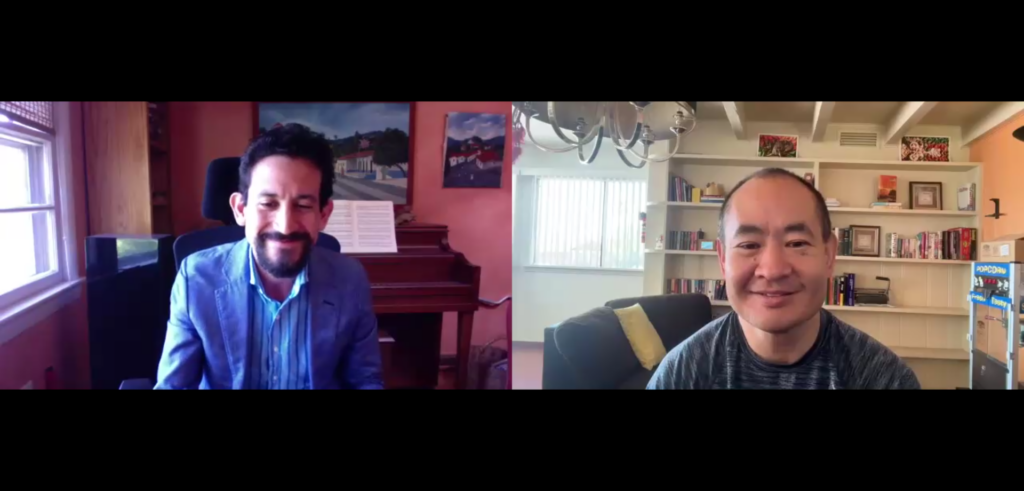
My name is Lawrence Justin Mills. I’m a Maryland filmmaker and documentary director. But long before I picked up a camera, I had a legal background — a JD and years of thinking carefully about how laws are written and whether they hold up. That combination is how I ended up filing a constitutional challenge in federal court that is now pending before the United States Court of Appeals for the Ninth Circuit.
This is the story of why I did it, how I did it, and what it could mean for millions of people.
Why Casino Resorts Are Still the Exception
Smoking has been eliminated from indoor public places across America — restaurants, workplaces, airports, shopping malls. That shift happened over decades, and it reflected a clear consensus: secondhand smoke is harmful, and the public has a right to breathe clean air indoors.
But casinos carved out an exemption.
Nevada has what’s called the Nevada Clean Indoor Air Act. It prohibits indoor smoking in all public indoor places. But the law includes a specific exemption for casino resorts — which strips that protection away from patrons, workers, and families who happen to be inside one.
New Jersey has the same structure. Pennsylvania does too. These aren’t small venues. Nevada’s casino resorts on the Las Vegas Strip see over 40 million visitors a year. The cumulative secondhand smoke exposure, across those three states and that volume of people, translates to thousands of years of human life lost.
I wasn’t born thinking about this as a legal issue. I grew up aware of what tobacco does to people. My grandfather on my dad’s side died from smoking in his 40s. My dad — who never smoked a day in his life — has macular degeneration from secondhand smoke exposure. My grandfather on my mother’s side died from emphysema. Tobacco killed people I loved. I know what it costs.
What the Constitution Actually Requires
When I was at the Venetian one evening and overheard other guests complaining about the smoke, something clicked. It wasn’t just me. It wasn’t just a preference. And I realized I had the legal background to look at this differently.
Here’s the question I kept coming back to: when a law singles out a specific class of people — casino patrons, casino employees, families visiting a resort — and removes their legal protections, what does the Constitution require?
Most people associate constitutional protection with race or ethnicity, where courts apply what’s called strict scrutiny: a compelling government interest is required. The casino smoking exemption doesn’t trigger that level of review. But it still has to meet a minimum standard. Courts call it rational basis review — the law must at least be rationally related to a legitimate government interest.
That sounds like a low bar. And it is.
But throughout the entire litigation in Nevada, the state’s attorneys — representing the health official defending that exemption — never once argued what legitimate government interest it serves. They didn’t claim it protects jobs. They didn’t claim it generates revenue in a way that serves the public. They never presented anything.
The simplest explanation — and what the facts point to — is that the exemption exists to appease casino preferences. That’s not a legitimate government interest. It’s not even a plausible one. And it doesn’t survive even the most minimal constitutional scrutiny.
What Happened in Court
I filed the constitutional challenge myself. I had standing because I’m a patron — I personally went to casino resorts on the Strip and was exposed to secondhand smoke. So are millions of others. That’s the injury that gives someone the legal right to bring a claim.
The Ninth Circuit denied the motion to dismiss. That means the appellate court ruled that the case should go forward. That’s significant — it’s not a final ruling, but it means the challenge is not frivolous. It has merit enough to proceed.
In January 2026, the Appellate Court of New Jersey reached a similar conclusion. A constitutional challenge brought by an organization representing New Jersey casino workers was initially dismissed at trial. The appellate court reversed that dismissal and said the challenge should go forward. New Jersey’s constitutional framework is slightly different, but the underlying logic is the same: there is no legitimate government interest that justifies exposing workers and the public to secondhand smoke in a casino while protecting everyone else everywhere else.
I wrote a paper in 2025 predicting that these exemptions would be eliminated through constitutional challenges. What’s happened since — in both Nevada and New Jersey — tracks that prediction.
The Workers Are the Most Exposed
I want to be clear about who bears the heaviest cost here.
Casino dealers and floor workers aren’t just passing through. They’re standing at tables, in close proximity to smokers, for eight-hour shifts. Every day. For years. The secondhand smoke exposure for casino employees is not comparable to a patron’s occasional visit — it’s occupational, sustained, and cumulative.
I can’t imagine a more directly harmed group of workers. They have no meaningful choice about their exposure. They go to work and they breathe the air their employer is legally permitted to fill with tobacco smoke, because of an exemption that no court has ever been given a legitimate reason for.
There is research documenting the health effects on casino workers. You don’t have to develop lung cancer to be harmed — the damage accumulates well before any diagnosis. And casino ventilation systems, however sophisticated, don’t solve the problem. From firsthand experience, the smell in those casinos is intense. If you can smell it, it’s doing harm.
Why I’m Doing This Without Pay
I am not receiving money for this. If the constitutional challenge succeeds, there’s no prize, no settlement, no percentage of anything. I’m doing it because I think it’s the right thing to do — and because I recognize the scale of the harm.
Three statutory exemptions. Three states. Thousands of years of life lost from cumulative public exposure. That’s the magnitude of what these laws permit every single year they stay on the books.
The New Jersey casino workers union reached the same conclusion independently. Other people are beginning to fight this same fight. That matters to me. It shows that others see what I see — that this is not a minor regulatory issue. It is a public health crisis hiding in plain sight, protected by an exemption that was never justified to begin with.
How an Ordinary Person Mounts a Constitutional Challenge
The question I hear most is: how does someone actually do this?
The short answer is standing. You have to have been harmed by the thing you’re challenging. Because I visited Nevada casino resorts as a patron and was exposed to secondhand smoke, I had an injury — the same injury shared by 40 million other visitors a year. That injury gave me the legal right to bring the claim.
From there, it’s a matter of identifying the constitutional issue — which standard of review applies, what the government’s burden is, and whether that burden is met. In this case, the burden is low. Rational basis. And the government’s lawyers never even tried to meet it.
I’m a filmmaker and a documentarian — my work on The Path of the Shadows is about bearing witness to things that matter, even when they’re inconvenient or uncomfortable. This fight is an extension of that same instinct. Document what’s happening. Name what’s wrong. Push for accountability.
What Comes Next
The Nevada case is pending. The New Jersey case is moving forward. More people are paying attention. If any of these challenges results in a ruling that the exemptions are unconstitutional, it raises a serious question about what happens to the people who were harmed while the exemptions were in place — casino workers especially, whose long-term health conditions are well-documented and directly tied to their working conditions.
It’s not unlike what happened with asbestos. Building owners knew. They kept operating. Workers got sick. The law eventually caught up.
I believe the same will happen here. Not because I’m certain of the outcome — I’m not — but because the legal foundation of these exemptions has never been stronger than “casinos would prefer it this way.” That’s not enough to survive constitutional review. It shouldn’t be.
Indoor smoking in casino resorts is an anomaly. It always was. The rest of the country figured that out decades ago. I think the courts are going to catch up.
I’m Lawrence Justin Mills — a Maryland filmmaker, documentary director, and now, apparently, a constitutional litigant. If you want to know more about my documentary work, the films that brought me here, visit the Films page or read about my work on Holocaust survivor testimonies. And if you care about the indoor smoking issue — whether as a casino patron, a worker, or just someone who thinks the air you breathe in a public place shouldn’t depend on who owns the building — follow this case. It matters.
About The Author
