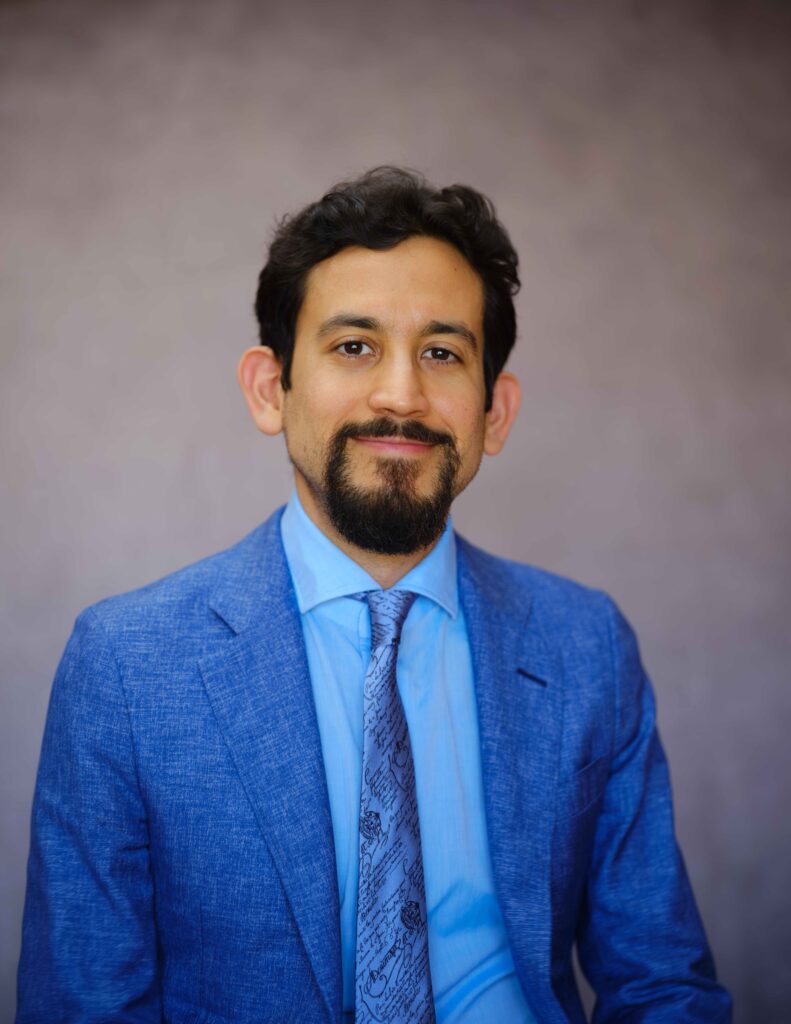
People ask, sometimes carefully and sometimes not, why a documentary filmmaker would go to law school in middle age. The careful version of the answer is that the disciplines are closer than they look. The less careful version is that I had to.
Both versions are true.
The work I came from
I have spent most of my adult life behind a camera. The films I am proudest of are about people the historical record has been content to summarize and slow to interview. My feature, The Path of the Shadows, is about Carlos Mauricio, a Salvadoran civil war survivor I followed for more than a decade until his death in 2020. (I have written separately about Carlos here.) Before El Camino, I recorded long-form Holocaust survivor testimony for a private archive held in trust with the families. I filmed the live concert of Luis Enrique Mejía Godoy in Washington, D.C. — the Nicaraguan songwriter whose music carried a revolution. I documented the 2009 FMLN electoral victory celebrations in Maryland.
These are not flashy projects. None of them was made to win prizes. The Holocaust archive will probably never be released in any form most people would call a “release.” The Mejía Godoy film lives mostly in the hands of the families who were in the room. Carlos’s film is the closest thing I have to a public-facing project, and even that one was made with the patience of his wife, Gloria, and the willingness of his daughter to spend an afternoon helping me understand what her father had actually said in the third hour of a 2011 interview.
What I learned, slowly
Documentary work — at least the long-form kind — rewards a specific temperament. Patience. Precision. A willingness to be wrong about something small in order to be right about something large. A stubbornness about getting the record down accurately the first time so it does not have to be re-established later. A respect for what other people remember and an unwillingness to fill in their sentences for them.
It also rewards a certain kind of honesty about your own role. You are not the protagonist of the documentary. You are the witness. The subject is the protagonist; the audience is the jury; you are the patient assembler of the record. If you do your job, the subject and the audience meet each other in a way that would not have been possible without you. If you do your job badly, they do not meet, or worse, they meet a version of each other that is not real.
I have come to think of this as a kind of evidentiary practice. The rules of evidence in a courtroom are not actually about evidence; they are about how to assemble a record in front of a person who will later have to decide something based on the record. Documentary, at its best, is the same job.
The bridge
Once you have learned to think of documentary work as evidentiary practice, you start to notice that the rest of the courtroom is close at hand.
A good interview is a deposition. A good interview log is a privilege log. A good consent process is a more careful version of what civil discovery is supposed to be. A good editing decision — we are leaving this in because the audience deserves the whole answer; we are leaving that out because it was off the record and we promised — is the work of a judge ruling on a motion in limine. The substance is different, the stakes are different, but the temperament is the same.
I came to law school because, after twenty years of doing this work for free or close to it, I realized that the temperament had a second career attached to it. There are not enough lawyers in the kinds of cases I have been around. There are not enough lawyers who already know how to listen in the third hour. There are not enough lawyers who understand that the most important sentence in a 200-page record is usually the one nobody else has noticed.
Why Lincoln Memorial University – Duncan
LMU Duncan, in Knoxville, is an ABA-accredited law school that takes adult learners seriously and that has been very generous to me. The faculty are real practitioners. The library has the books I needed. The class culture welcomes the kind of student who is starting over from another life. I am not the only one in my cohort who came to law from another career; I am one of several. We are quieter than the 22-year-olds and we drink less coffee, but we make up for it in the seminars.
I am still a filmmaker. I will be a lawyer eventually. The disciplines, as I said at the top, are closer than they look.
What I am working on now
The film. El Camino de la Sombra is in extended-trailer release; the feature is being prepared for festival and theatrical roll-out in late 2026. The Holocaust short companion is in development for 2027. I am in early production on a set of short pieces about Latin American music in the U.S. diaspora.
The law degree. I am in the J.D. program at LMU Duncan. The eventual practice will be in civil rights and government accountability — areas where I can do, with a license, what I have spent twenty years preparing to do without one. The temperament is the same. The instruments are different.
The everyday work. Reading. Walking. Listening longer than is comfortable. Drinking water from the kitchen of a person who has decided I am worth talking to. Trying to do honor to that decision.
The rest, I am willing to find out as I go.
Lawrence Justin Mills is a documentary filmmaker and a student at Lincoln Memorial University – Duncan School of Law. He writes at lawrencejustinmills.com.
Read next: – “Witnessing Carlos Mauricio” – “Preserving Testimony: Notes on a Holocaust Archive”
About The Author
